Question 1 of 10
The CHINESE INVENTION of the MAGNETIC COMPASS (by 11th century CE for navigation) is historically significant because it:
AConfined to a narrow elite context, with limited broader social, economic, or cultural impact during the period.
BChronologically misplaced in most popular accounts, occurring substantially earlier or later than commonly claimed.
CWidely rejected in modern scholarship as an inaccurate later reconstruction of a much more limited underlying event.
DEnabled reliable navigation across large ocean distances — first in Chinese and Indian Ocean maritime commerce, later underpinning the European Age of Exploration (from the 15th century onward).
Explanation
The magnetic compass, developed in China by the 11th century CE for navigation (an earlier form for divination existed since the Han dynasty), enabled reliable directional navigation across large ocean distances — first in Chinese and Indian Ocean maritime commerce, later underpinning the European Age of Exploration (from the 15th century onward). Combined with improved ship design (caravels), improved cartography, and the astrolabe, the compass made trans-oceanic voyages practical.
Question 2 of 10
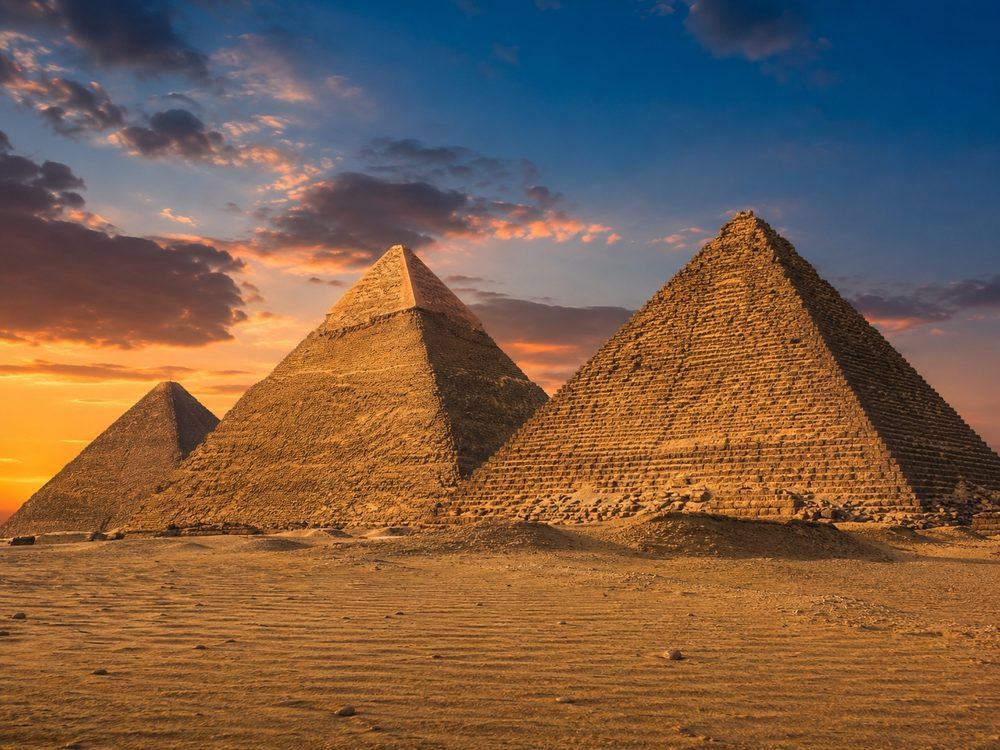
Which ancient civilization built the PYRAMIDS at GIZA?
AAncient Greece.
BAncient China.
CAncient Mesopotamia.
DAncient Egypt.
Explanation
The Pyramids at Giza (on the outskirts of modern Cairo) were built by ancient Egyptian civilization. The Great Pyramid of Khufu (~2560 BCE) was originally about 147 meters tall (now ~139 m after erosion of outer casing stones) and remained the world's tallest human-made structure for nearly 4,000 years until surpassed by Lincoln Cathedral's spire ~1300 CE. The two smaller pyramids at Giza were built for Khafre and Menkaure, Khufu's Fourth Dynasty successors. Egyptian pyramid-building peaked during the Old Kingdom (~2686–2181 BCE) as royal tomb architecture.
Question 3 of 10
The spread of BUDDHISM from its origins in northern India (roughly 5th century BCE onward) to Central Asia, China, Korea, Japan, and Southeast Asia is a canonical example of:
AWidely discussed in older popular accounts but rarely referenced in modern comparative historical scholarship, and generally regarded today as a minor rather than transformative episode in the broader historical trajectory.
BA minor regional development that had no lasting influence on broader historical patterns and left no durable institutional or cultural legacy in the surrounding areas.
CCultural diffusion of a religion via trade routes, monastic networks, and (in some cases) political patronage — reshaping the religious and cultural geography of much of Asia.
DRepresents a category confusion in most standard accounts, mixing distinct developments that occurred in different periods, regions, and cultural contexts under a single misleading label.
Explanation
The spread of Buddhism from northern India to Central Asia (via the Silk Road), China, Korea, Japan, and Southeast Asia is a canonical example of cultural diffusion of a religion via trade routes, monastic networks, and political patronage (Ashoka in India, various Chinese emperors, various Japanese and Korean rulers). It reshaped the religious and cultural geography of much of Asia over the following two millennia.
Question 4 of 10
The rise of the first river-valley civilizations (Mesopotamia, Egypt, Indus Valley, and Yellow River basin between roughly 3500 and 1600 BCE) was MOST directly enabled by which combination of factors?
ACold, arid conditions that eliminated the need for water management.
BIsolation from all trade routes and neighboring populations.
CUniform political systems imposed by a single external empire.
DReliable water from rivers, fertile alluvial soils that supported intensive agriculture, and a resulting agricultural surplus that supported non-farming specialists (rulers, priests, artisans).
Explanation
River-valley civilizations rose where reliable water and fertile alluvial soils supported intensive agriculture. The resulting agricultural surplus enabled specialization — rulers, priests, artisans, soldiers — that in turn supported urban development, writing, and monumental architecture. Options B–D contradict documented archaeological evidence.
Question 5 of 10
The FALL of the WESTERN ROMAN EMPIRE is traditionally dated to which year?
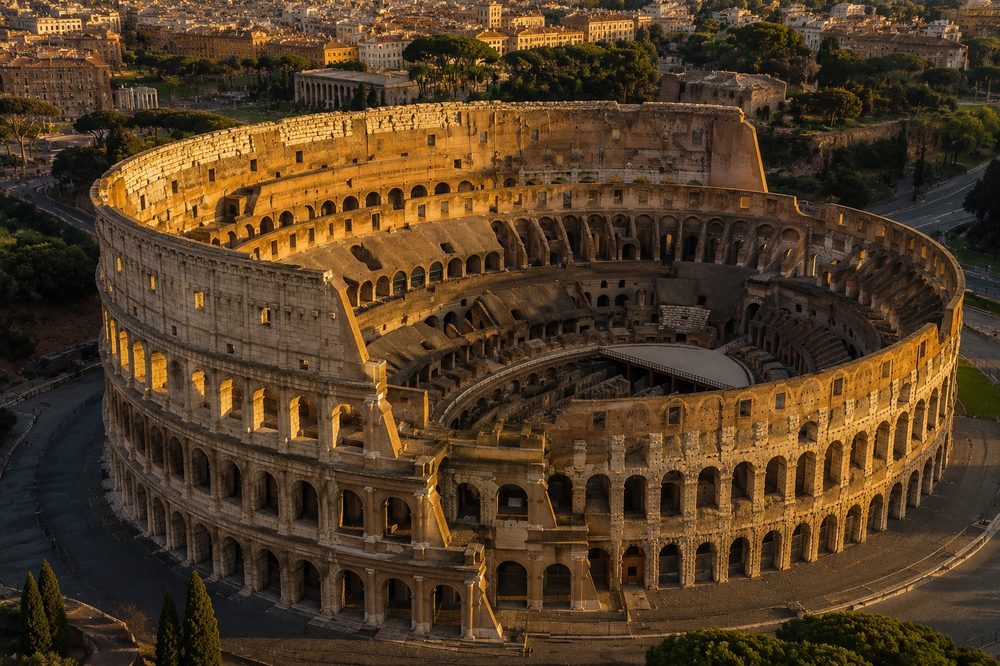
A476 CE (deposition of Emperor Romulus Augustulus by Odoacer).
B395 CE (division of the empire under Theodosius I).
C410 CE (sack of Rome by the Visigoths under Alaric).
D284 CE (Diocletian assumes imperial power).
Explanation
The fall of the Western Roman Empire is traditionally dated to 476 CE, when the Germanic chieftain Odoacer deposed the young emperor Romulus Augustulus (whose name ironically combined the founder of Rome and the first emperor). Odoacer became King of Italy under nominal Byzantine suzerainty. This date is a scholarly convention rather than a sharp rupture — Roman institutions, culture, and identity persisted in various forms in the West well after 476 (in the successor kingdoms of Ostrogoths, Franks, Visigoths, and others) and continued in the East as the Byzantine Empire until 1453. 27 BCE is when Augustus established the Empire. 1453 is when Constantinople fell to Ottoman forces. 1000 CE is a millennium marker without direct Western Roman significance.
Question 6 of 10
Which of the following civilizations is CORRECTLY paired with its primary river system?
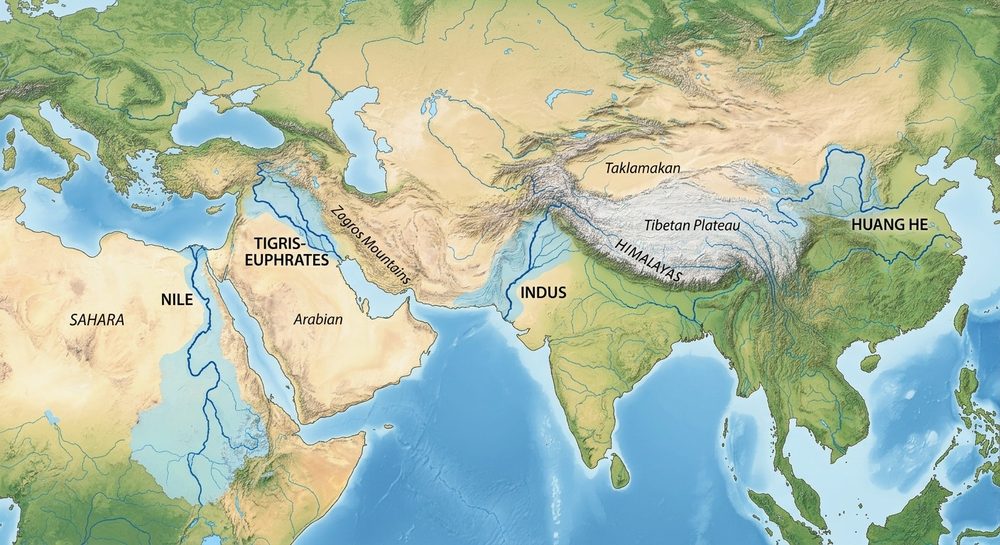
AAncient Egypt — Nile River.
BAncient China — Danube River.
CAncient India — Amazon River.
DAncient Sumer — Mississippi River.
Explanation
Ancient Egypt developed along the Nile River, whose reliable annual flooding deposited fertile silt on farmland and enabled the emergence of one of the world's earliest and most durable civilizations. Ancient Sumer developed along the Tigris and Euphrates rivers (Mesopotamia). Ancient China's early civilization developed along the Yellow River (Huang He) and later the Yangtze. The Amazon and Mississippi are New World rivers unconnected to Old World Bronze Age civilization emergence, and the Danube runs through Central and Eastern Europe.
Question 7 of 10
The FEUDAL SYSTEM of medieval Europe (roughly 9th–15th centuries CE) is BEST characterized by:
AAn absence of any political or economic structure of any kind.
BBest treated as an artifact of 19th-century nationalist historiography rather than as a distinctive historical development, with most substantive claims about it lacking primary-source support.
CA hierarchical arrangement in which land was granted in exchange for military and other services — lords granted use of land to vassals in exchange for service; peasants worked the land in exchange.
DA single democratically-elected central government covering all of medieval Europe.
Explanation
Medieval European feudalism was a hierarchical arrangement in which land was granted in exchange for military and other services. Lords granted use of land (fiefs) to vassals in exchange for service and loyalty; peasants (serfs) worked the land in exchange for protection and use rights. It is a foundational concept in medieval European historical geography. Options B–D contradict documented history.
Question 8 of 10
The TANG dynasty of China (618–907 CE) is historically significant because it:
AReached one of the peaks of Chinese cultural and economic power, produced major advances in poetry, arts, and technology, and made China a cosmopolitan center connected to Central Asia, India, Korea.
BPrimarily military in character, with little cultural or institutional influence beyond its immediate context.
CRepresents a category confusion in most standard accounts, mixing distinct developments from different periods.
DWidely rejected in modern historical scholarship as an inaccurate 19th-century reconstruction of a much more limited underlying event, with little primary-source basis.
Explanation
The Tang dynasty of China (618–907 CE) reached one of the peaks of Chinese cultural and economic power. It produced major advances in poetry (Li Bai, Du Fu), arts, and technology (block printing, mechanical clocks). Tang China was a cosmopolitan center connected to Central Asia, India, Korea, and Japan through the Silk Road overland trade and maritime networks.
Question 9 of 10
The ATHENIAN DEMOCRACY at its 5th-century BCE peak had which specific institutional features?
ASubstantially reversed within a single generation by successor regimes, producing no durable political or cultural transformation and leaving few traces in subsequent centuries.
BChronologically misplaced in most popular accounts, occurring substantially earlier or later than commonly claimed, and involving different actors from those usually named.
CThe Ecclesia (citizen assembly) that voted on major policy issues; the Council of 500 (Boule) that prepared assembly business; and citizen courts (Heliaia) with large juries selected by lot — with.
DConfined to a single generation and substantially reversed by later regimes, with no lasting institutional legacy and no direct influence on the developments that followed in subsequent centuries.
Explanation
The Athenian democracy at its 5th-century BCE peak (particularly the period after Cleisthenes' 508 BCE reforms through Pericles' leadership) had specific institutional features. The Ecclesia (citizen assembly) that met roughly 40 times per year on the Pnyx hill, voted on major policy issues (war and peace, treaties, taxation, ostracism). The Council of 500 (Boule), chosen by lot with rotating membership, prepared assembly business and administered day-to-day government. Citizen courts (Heliaia) with juries of hundreds selected by lot handled judicial matters. Citizenship was restricted to native-born free adult males (excluding women, enslaved persons, and metics — about 15–20% of the total population).
Question 10 of 10
The GREAT WALL of CHINA was built primarily for what purpose?

AProviding a raised road for regular travelers and commerce.
BStoring surplus grain and providing communal shelter.
CDefense against nomadic peoples from the northern steppes.
DMarking the ceremonial boundary of the emperor's ritual authority.
Explanation
The Great Wall of China was built primarily for defense against nomadic peoples from the northern steppes — particularly the various steppe confederations (Xiongnu in earlier centuries, Mongols and other later groups) whose horseback military capabilities repeatedly threatened Chinese agricultural regions. Wall construction spanned many dynasties across two millennia. Early walls were built in the Warring States period (5th–3rd centuries BCE) and unified under the Qin (from 220 BCE). Extensive later construction occurred under the Han and various dynasties. The most substantial surviving Great Wall construction is from the Ming Dynasty (14th–17th centuries CE) — most of the impressive stone-and-brick wall visible near Beijing today is Ming construction. The Great Wall was not primarily a road (though troops did move along it), decoration, or grain storage. Its total length across all periods and branches has been estimated at over 21,000 km.