For AA × aa, what is the genotype of all offspring?
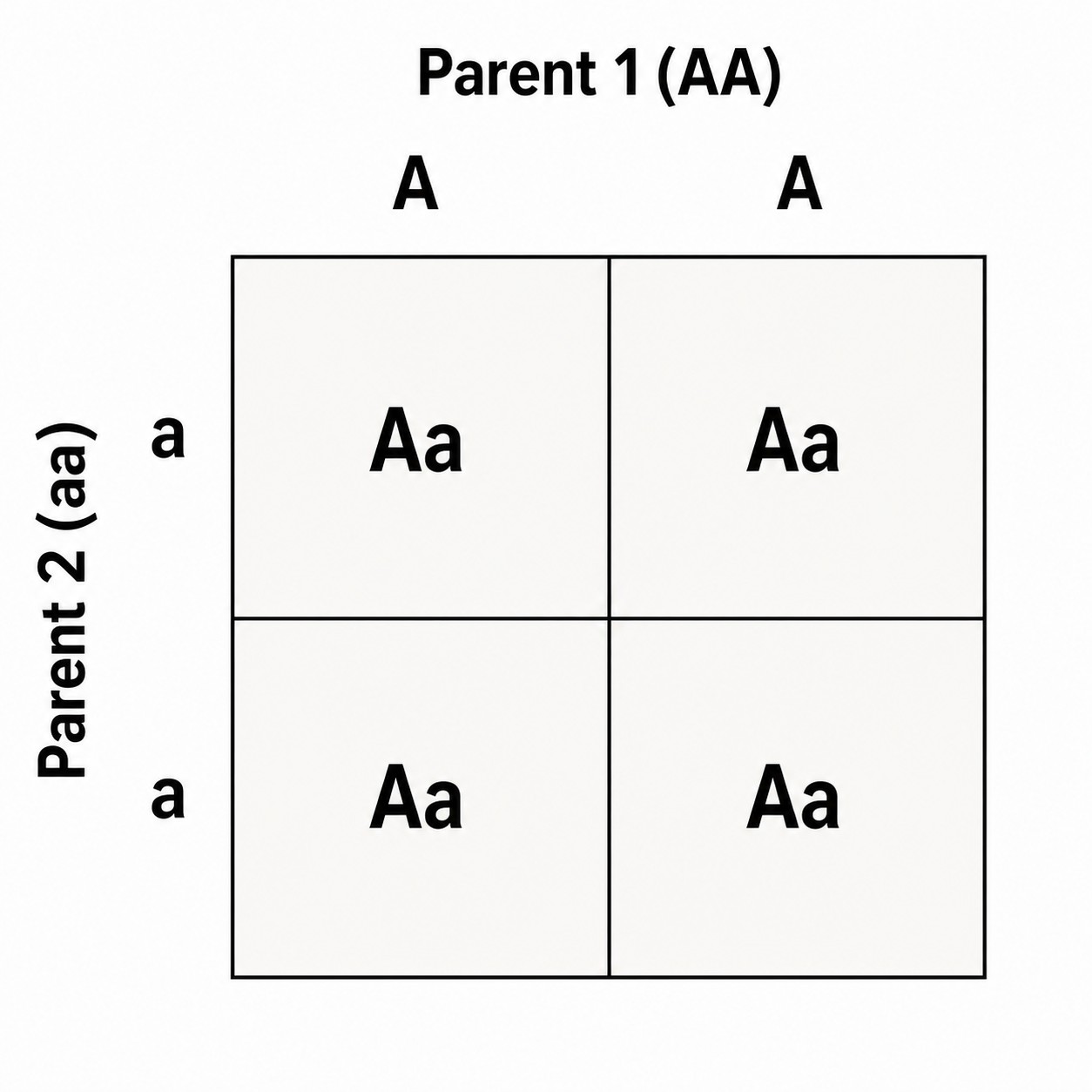
Explanation
Which process in the water cycle is shown by arrow X?
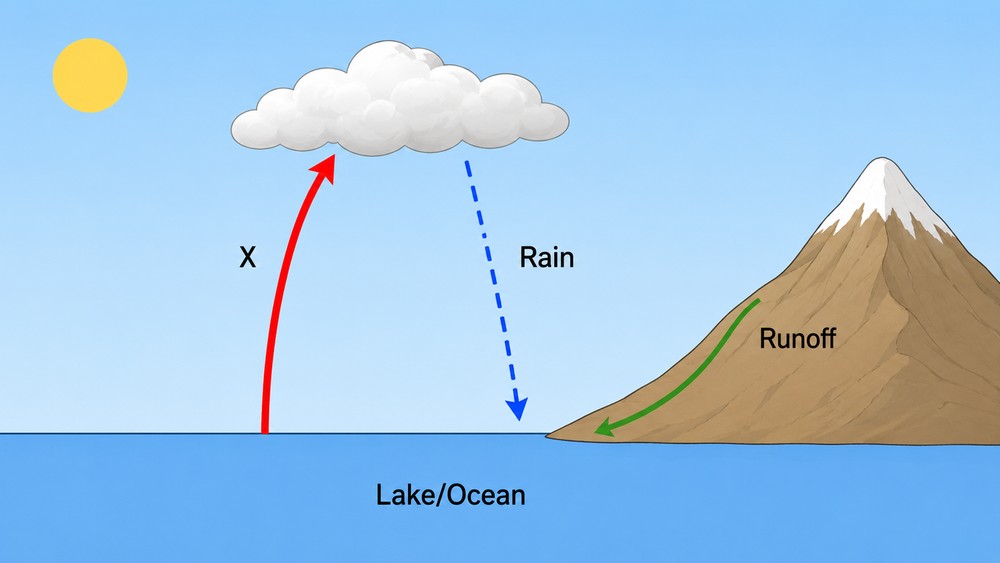
Explanation
Evaporation = liquid water → water vapor (gas) due to heat from the sun.
Complete cycle: Evaporation → Condensation (clouds form) → Precipitation (rain) → Runoff → Collection
In the phylogenetic tree shown, which two species are most closely related?
Explanation
The graph shows population over time of a beetle species. Dark beetles increased while light beetles decreased on a tree with dark bark. What is this an example of?
Explanation
Based on the Punnett square below, what is the probability of the offspring being heterozygous?
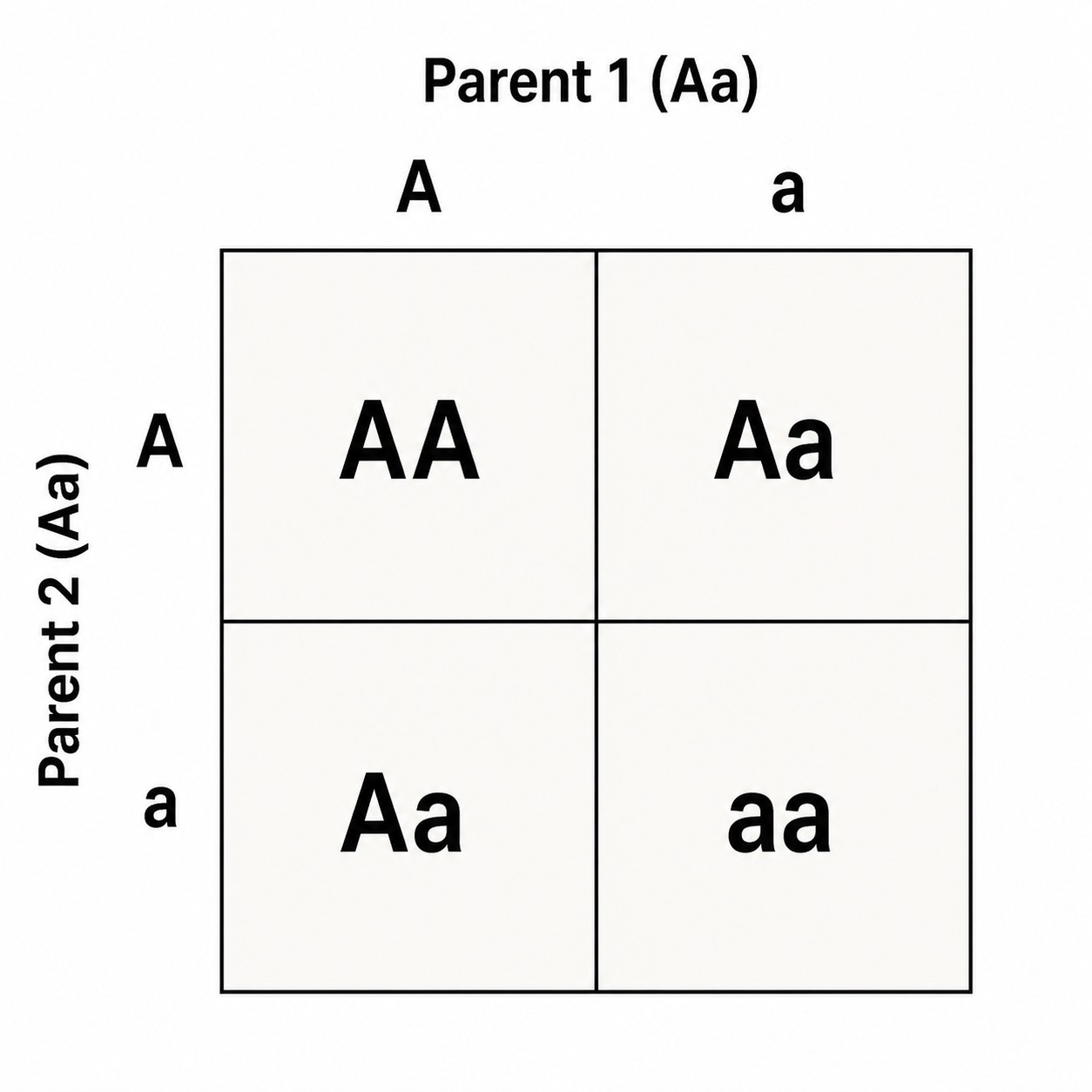
Explanation
BB = 1/4 (homozygous dominant)
Bb = 2/4 = 1/2 (heterozygous) ← THIS
bb = 1/4 (homozygous recessive)
Probability of heterozygous = 50%
What is the role of guard cells?
Explanation
The food web shown contains many species. Which type of organism is missing for this ecosystem to be sustainable?
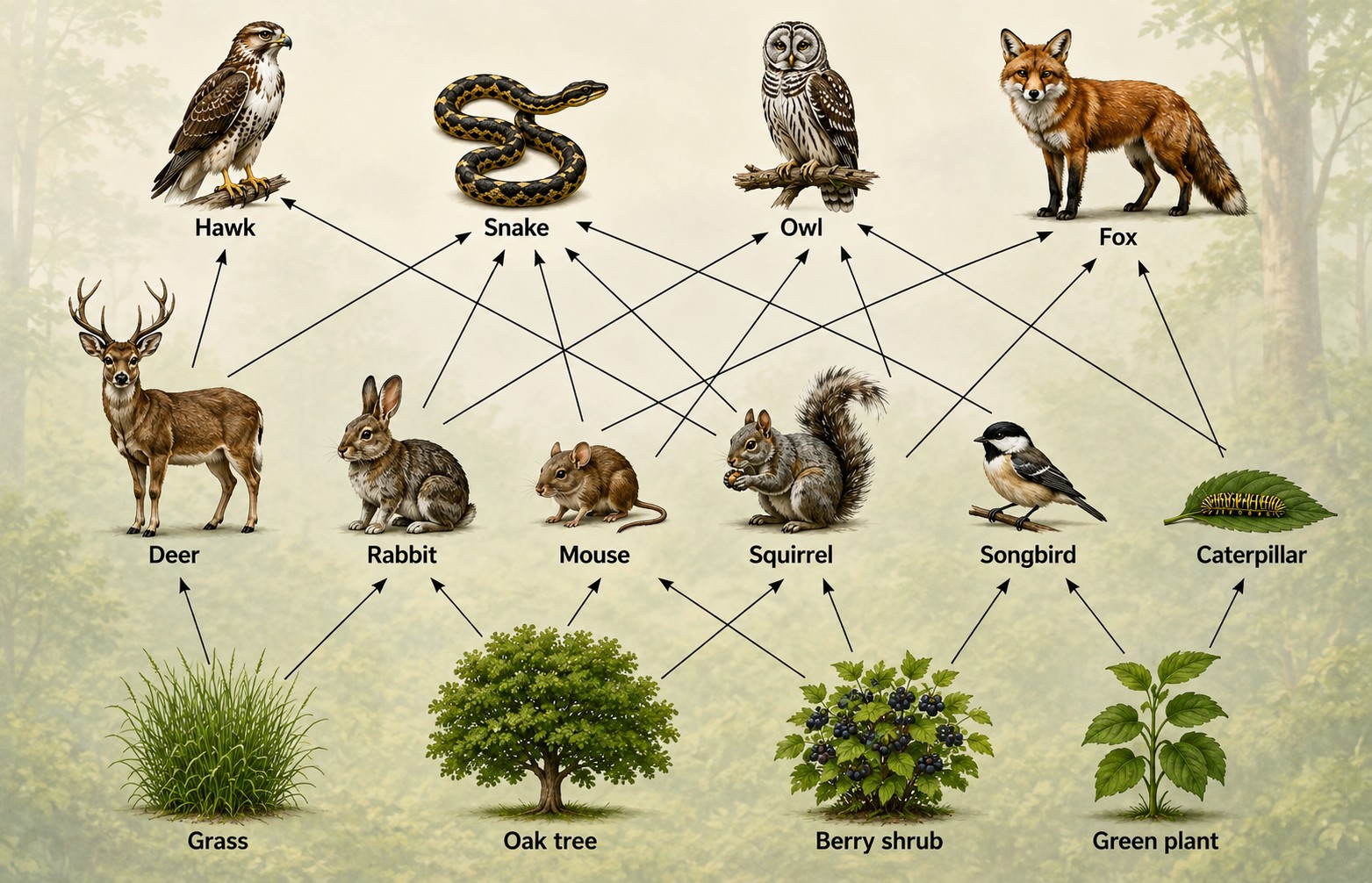
Explanation
A gene for coat color in a certain animal exhibits epistasis: one gene (B/b) determines whether pigment is black (B) or brown (b), while a separate gene (E/e) determines whether ANY pigment is deposited in the fur at all — ee individuals are albino (white) regardless of their genotype at the B gene. In a cross between two BbEe individuals, what phenotypic ratio is expected among the offspring?
Explanation
The kidney filters glucose freely into the nephron and then reabsorbs it using carrier proteins that saturate. In one patient the glomerular filtration rate is a steady 125 mL of plasma per minute, and the reabsorption carriers can move at most 375 mg of glucose per minute back into the blood no matter how much arrives. Untreated diabetes pushes this patient's plasma glucose to 500 mg per deciliter. At that plasma concentration, at what rate does glucose appear in the urine?
Explanation
Sickle cell allele frequency remains high in regions where malaria is common. This persistence is best explained by —